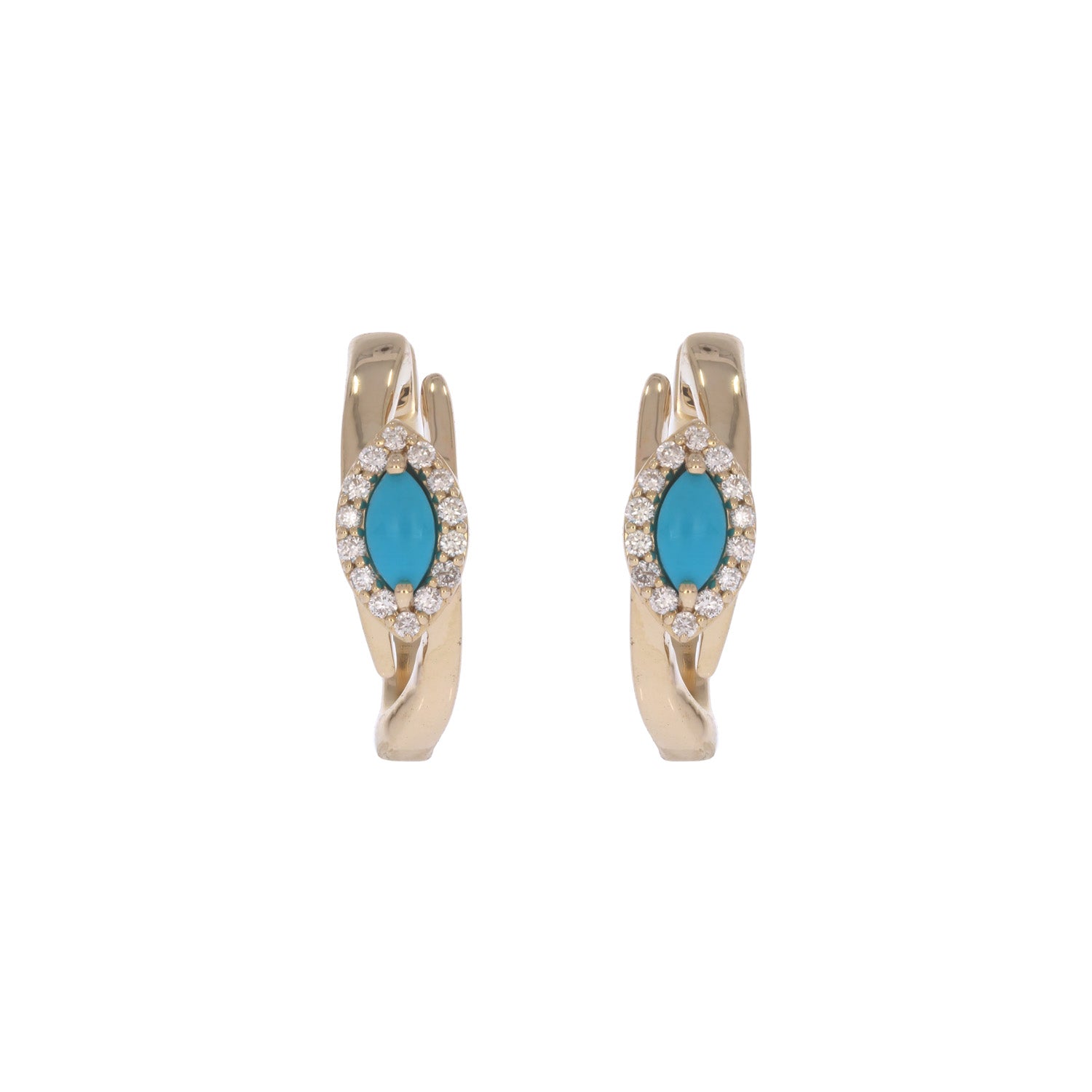

How to Tell If Gold Is Real: Simple Ways to Test Gold at Home
If you’re wondering how to tell if gold is real, start with the markings, condition, and construction of the piece. These checks can reveal useful clues, but no simple household test can confirm gold purity with complete certainty.
A 14K stamp, for example, tells you something important about the claimed gold content. It doesn’t automatically prove that the item is genuine.
You can check several things at home before taking jewelry to a professional. This article covers karat marks, magnets, wear, common home tests, gold chains, necklaces, coins, and the differences between solid gold, gold-filled, and gold-plated jewelry.
How to Tell If Gold Is Real
The easiest place to start is with the jewelry itself. You don't need special equipment for the first inspection.
Look closely at the piece under bright, natural light. A desk lamp works too, especially if you use a magnifying glass to inspect small marks.
1. Check the karat stamp
Look for markings such as 10K, 14K, 18K, 22K, or 24K.
The karat number describes the proportion of pure gold in the alloy. For example, 18K gold contains 18 parts gold out of 24, or 75% pure gold.
2. Look for a maker's mark
A quality mark may appear alongside a manufacturer's name, registered trademark, symbol, or initials.
In the U.S., the FTC advises consumers to look for the name or U.S. registered trademark associated with a karat quality mark.
A missing mark doesn't automatically mean an item is fake. Older, handmade, imported, repaired, or unusual pieces can require additional verification.
3. Examine the color
Real gold has a consistent appearance, but color alone isn't enough to identify it.
Gold alloys can look different depending on their composition. White gold, yellow gold, and rose gold can all contain genuine gold while having noticeably different colors.
4. Look for discoloration
Pay close attention to areas that receive the most friction.
Check the edges, clasp, chain links, underside of a ring, and spots that regularly touch your skin or clothing.
If a yellow surface wears away and exposes a noticeably different metal underneath, plating may be involved. Still, discoloration by itself isn't proof that an item isn't gold.
5. Consider the weight and feel
Gold is a dense metal, so a genuine gold item may feel heavier than a similarly sized piece made from a lighter metal.
That said, weight alone can't establish authenticity. Jewelry can be hollow, lightweight by design, or made from different alloys.
Check the Gold Karat Mark
Karat, written as K, tells you how much pure gold is present in a 24-part alloy.
Pure gold is 24K, but it is relatively soft. Jewelry is commonly alloyed with other metals to improve strength and durability.
|
Karat |
Approximate Gold Content |
Common Jewelry Use |
|
10K |
41.7% |
Everyday jewelry |
|
14K |
58.3% |
Rings, chains, bracelets, necklaces |
|
18K |
75% |
Fine jewelry and higher-gold-content pieces |
|
22K |
91.7% |
High-gold-content jewelry and some traditional pieces |
|
24K |
99.9% |
Very high-purity gold, coins and bullion |
A karat stamp is useful, but don't treat it as absolute proof.
A counterfeit piece can carry a misleading mark. That's why the stamp should be considered alongside the jewelry's condition, seller information, documentation, and, when necessary, professional testing.
Also watch the wording around "solid gold." In FTC guidance, "solid gold" refers to a gold item that isn't hollow, while the karat mark indicates the gold content.

14K Solid Gold Charm with Gemstones
VIEW PRODUCT
14K Solid Gold Heart Diamond Ring
VIEW PRODUCT
14K Solid Gold Diamond and Gemstone Ring
VIEW PRODUCT
14k Solid Gold Diamond Heart Bracelet
VIEW PRODUCTHow to Test Gold at Home
Several methods are commonly suggested when people ask how to test if gold is real.
Some are useful as preliminary checks. Others are much less reliable than they appear.
The important point is simple: a home test can raise or lower your confidence, but it shouldn't be treated as final proof for an expensive piece.
Magnet Test
Gold itself isn't magnetic, so a strong attraction to a magnet can be a reason to investigate further.
Place a strong magnet near the item and observe what happens. If the jewelry is strongly attracted, it may contain a magnetic metal that deserves closer examination.
But there's a catch.
A lack of magnetic attraction doesn't prove the item is real gold. Many non-gold metals aren't strongly magnetic either, and jewelry can contain different metals in its construction.
So, use the magnet test as a quick screening step, not a verdict.
Look for Discoloration or Wear
This is one of the more practical visual checks.
Inspect areas that experience repeated contact, including:
- Edges and corners
- Clasps
- Chain links
- Scratched sections
- Undersides of rings
- Areas that rub against clothing
- High-contact sections near pendants
If a gold-colored surface has worn through and reveals silver, gray, copper-colored, or another base metal, the piece may be plated.
However, wear can have other causes. Dirt, oxidation of alloy metals, repairs, and exposure to chemicals can change how jewelry looks.
Skin Reaction Test
You may have heard that fake gold turns your skin green while real gold doesn't.
That's not a dependable authenticity test.
Skin reactions can be influenced by the other metals in an alloy, personal sensitivity, moisture, cosmetics, soaps, and other factors. A reaction doesn't automatically mean the jewelry is fake, and no reaction doesn't prove that it is genuine.
Ceramic or Scratch Tests
The ceramic test is often discussed online because it appears simple.
The basic idea is that rubbing metal against an unglazed ceramic surface may leave a colored streak. People sometimes use the color of that mark as an indication of whether the piece contains gold.
The problem is that this test can scratch the jewelry, and the resulting mark doesn't establish exact gold purity.
For a valuable ring, inherited necklace, collectible item, or expensive chain, damaging the surface to perform a household test isn't worth the risk.
Acid Gold Test
Acid testing can provide more meaningful information about karat purity than casual household methods, but it involves chemicals and requires proper technique.
GIA describes touchstone testing as a relatively nondestructive method used to assess karat gold, while also noting that it uses acids and requires careful procedures.
Because incorrect testing can damage jewelry or create a safety problem, professional testing is the better choice for valuable pieces.
How Can You Tell If a Gold Chain Is Real?
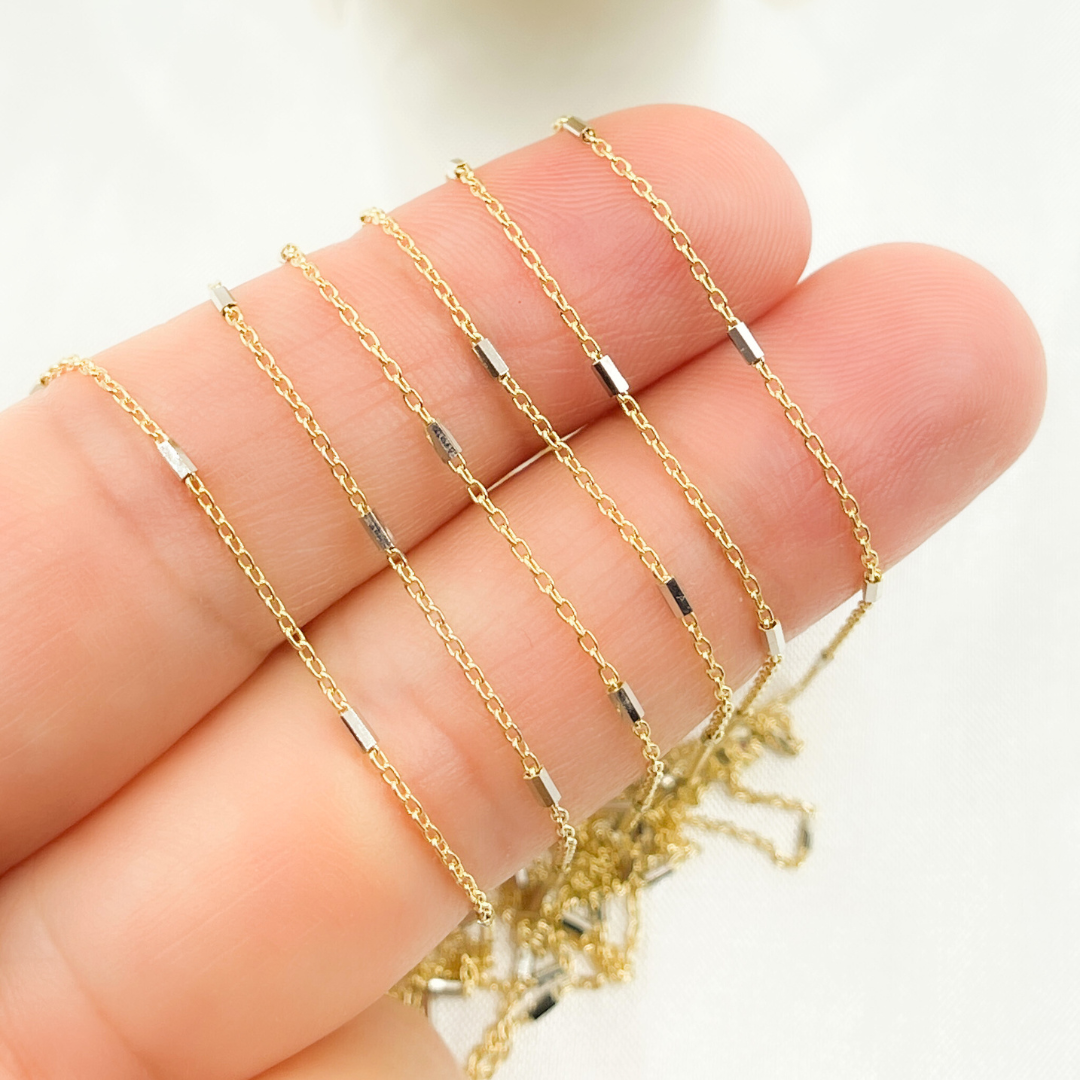
14k Solid Gold Tube Satellite Two Tone Chain
VIEW PRODUCT
14k Gold Flat Marina Link Chain
VIEW PRODUCT
14K Solid Gold Flat Bar & Singapore Link Chain
VIEW PRODUCT
14K Solid Gold Rolo Chain
VIEW PRODUCTIf you're asking how can you tell if a gold chain is real, start with the clasp.
The clasp is often one of the easiest places to find a karat marking. Use good lighting and a magnifier if the stamp is tiny.
Next, inspect the links.
Look closely at areas where the links rub against each other. On plated jewelry, repeated friction can eventually expose a different metal underneath the gold-colored surface.
Check the chain's overall construction too. A very lightweight chain isn't automatically fake, since some genuine gold chains are hollow or designed to reduce weight.
If the chain came with an invoice, appraisal, product description, or other documentation, compare the stated karat with the physical markings.
For a valuable chain, professional testing is the safest final step. A professional can assess the metal instead of relying on appearance alone.
Tresor Jewelry Inc, for example, currently lists both solid gold chains and gold-filled chains, which illustrates why the product description matters. Its 18K gold chain collection states that the pieces are solid 18K gold, while its gold-filled collection uses a different construction.
How Can You Tell If a Necklace Is Real Gold?
A necklace needs a slightly broader inspection because different components may not always have identical construction.
Start with the clasp and look for a karat mark or maker's mark.
Then inspect the chain links, pendant, soldered areas, and worn edges. A plated surface may show a different base metal where repeated friction has removed the outer layer.
Don't assume that every component has exactly the same gold content just because the necklace looks uniform.
For example, a necklace can include a gold chain with a pendant containing gemstones or another metal component. Check the markings and product documentation for the individual parts when that information matters.
If you're still unsure, professional testing removes much of the guesswork.
Tresor's current catalog includes products described specifically as 14K solid gold necklaces, such as its 14K solid gold diamond and gemstone necklace.
How to Tell If Something Is Real Gold or Gold Plated
One of the biggest sources of confusion is the difference between solid gold and gold-coated jewelry.
Gold-plated jewelry isn't necessarily "fake jewelry." It simply isn't the same thing as a solid gold alloy.
|
Feature |
Solid Gold |
Gold Plated |
Gold Filled |
|
Gold content |
Gold alloy throughout the item |
Gold layer over another metal |
Gold layer mechanically bonded to a base metal |
|
Construction |
Gold alloy throughout, although it may be hollow |
Base metal with surface gold |
Base metal with a thicker bonded gold layer |
|
Surface layer |
Not simply a thin coating |
Yes |
Yes |
|
Wear |
Depends on alloy and construction |
Coating can wear away |
Generally more durable than ordinary plating |
|
Marking |
Usually includes karat information |
May include plating terminology |
Includes gold karat and gold-filled terminology |
|
Typical use |
Fine jewelry and long-term ownership |
Fashion and lower-cost jewelry |
Jewelry makers and everyday pieces |
The FTC explains that gold-filled, gold overlay, and rolled gold plate describe products with a layer of at least 10K gold mechanically applied to a base metal, subject to the applicable terminology and marking rules.
Gold-plated products have a gold layer applied to another metal. Over time, that surface can wear depending on how the item is used and the thickness of the coating.
So don't call gold-filled jewelry "fake gold." It contains real gold, but its construction is different from a solid gold alloy.
How to Tell If Something Is Real Gold or Silver
Gold and silver can sometimes be confused, especially when jewelry has a pale or white finish.
Start with the markings.
Common gold markings include 10K, 14K, 18K, 22K, and 24K. Sterling silver is commonly marked 925, which indicates 925 parts per thousand pure silver, or 92.5%.
A piece marked 925 is therefore generally identified as sterling silver, not solid gold.
But markings should still be checked in context. Gold-plated sterling silver can contain both materials, which means you may see silver-related markings on a piece with a gold-colored surface.
Tresor Jewelry Inc's catalog provides a good example of this distinction, with products described as gold-plated 925 sterling silver.
Color isn't enough. A yellow finish doesn't automatically mean gold, just as a white finish doesn't automatically mean silver.
How to Tell If a Gold Coin Is Real
Gold coins require more care because some are valuable for their collectible design, age, rarity, or condition.
Don't scratch or cut a potentially valuable coin just to perform a home test.
Instead, start with the coin's markings and design. Compare the date, denomination, inscriptions, mint details, and other features with trusted specifications for that exact coin.
Weight and dimensions are also useful.
A genuine coin should match the published specifications for its type. A noticeable difference in diameter, thickness, or weight can be a warning sign.
A magnet can provide another preliminary clue, but remember that a non-magnetic response doesn't prove a coin is gold.
For a valuable or collectible coin, authentication by a qualified professional is a much better choice than a destructive home test.
Which Gold Tests Are Actually Reliable?
Not all gold tests provide the same level of confidence.
A practical order is:
- Professional XRF testing
- Professional jeweler or laboratory testing
- Professional touchstone or acid testing
- Hallmark and documentation checks
- Home tests such as visual inspection and magnet testing
X-ray fluorescence, or XRF, is widely used to analyze metal composition without cutting into the jewelry. GIA describes XRF as one of the nondestructive scientific approaches used to determine gold purity.
Even professional testing has limitations. GIA has also documented cases where gold plating over another gold alloy can affect XRF readings, showing why experienced interpretation matters.
Touchstone testing can also be useful when performed by someone experienced with the method. It uses acid reactions to compare the unknown metal with known karat samples.
For expensive jewelry, the goal isn't to find a clever trick. It's to use a method appropriate for the item's value and construction.
Common Mistakes People Make When Testing Gold at Home
The biggest mistake is treating one clue as proof.
A magnet doesn't prove that non-magnetic jewelry is real gold. A stamp doesn't guarantee authenticity, and a color change doesn't identify the exact metal.
Another common mistake is using harsh chemicals without understanding the risks.
Acid testing is a professional technique for a reason. GIA notes that touchstone testing requires acids and careful procedures.
People also confuse gold-filled jewelry with gold-plated jewelry. These are different constructions, and neither should automatically be described as fake.
Finally, don't scratch an inherited ring or collectible coin just because an online video recommends it.
If the item could be valuable, professional testing is usually the smarter option.
When Should You Get Gold Professionally Tested?
Professional testing makes sense when the financial or sentimental value is significant.
Consider getting an item tested if it is:
- Expensive jewelry
- An inherited piece
- An investment item
- A gold coin
- Jewelry without clear markings
- A disputed purchase
- A suspected counterfeit
- A piece with unusual or inconsistent markings
- Jewelry you're planning to sell based on its gold value
It's especially important when a purchase price seems far below what you'd expect for the stated gold weight and karat.
A professional can examine more than color or a stamp. That's useful when the item contains plating, mixed metals, soldered sections, stones, or unusual construction.
How to Check Gold Before Buying Jewelry
Checking authenticity shouldn't start after you've paid.
Before buying, verify the stated karat and understand exactly what you're purchasing. "14K gold," "14K gold filled," and "14K gold plated" describe very different products.
Check the seller's information too.
Look for a clear business identity, product details, return policy, and appropriate documentation when the purchase warrants it. The FTC's consumer guidance also recommends paying attention to the seller or trademark associated with precious-metal quality marks.
Price deserves attention as well.
A very low price doesn't automatically mean a product is fake, but it deserves a closer look when the listing claims a substantial amount of solid gold.
If you're buying for resale or jewelry production, ask questions before placing a large order. Confirm the karat, construction, dimensions, and whether the product is solid, hollow, plated, or gold-filled.
For buyers looking for genuine gold jewelry or wholesale pieces, Tresor Jewelry Inc currently lists products in several categories, including solid 14K and 18K gold chains as well as gold-filled chains.
You can also compare specific product descriptions before buying, such as Tresor's 14K Solid Gold Box Chain or its broader 18K Gold Chain collection.
Final Takeaway
If you're trying to figure out how to tell if gold is real, start with the karat mark, maker's mark, appearance, wear, and construction.
Then use simple home checks only as preliminary clues.
The magnet test can raise suspicion, while discoloration may reveal plating. Neither one can prove that jewelry is genuine.
For valuable jewelry, inherited pieces, coins, or anything you're buying or selling for significant money, professional testing is the safer answer.
The key is knowing what the marking actually means. A 14K stamp refers to gold content, while terms such as gold plated and gold filled describe different ways gold is used in the piece. The FTC provides consumer guidance on these distinctions, and GIA documents professional methods used to assess gold purity.
Frequently Asked Questions
Is there a way to test if gold is real at home?
Yes. You can inspect the karat mark, maker's mark, wear, discoloration, weight, and magnetic behavior at home. These checks provide clues but don't conclusively prove authenticity or exact purity.
How can I tell if my gold chain is real?
Check the clasp for a karat mark, inspect worn links and edges, look for exposed base metal, and compare the piece with its documentation. For valuable chains, professional testing is preferable.
Can a magnet tell if gold is real?
No. Gold isn't magnetic, so strong attraction can raise suspicion. However, a lack of attraction doesn't prove that an item is real gold.
How do I know if 14K gold is real?
Look for the 14K marking and associated maker or trademark, then inspect the jewelry for signs of plating or inconsistent construction. A professional test is more reliable when authenticity matters.
How can I tell if something is real gold or silver?
Check the markings first. Gold commonly uses karat marks such as 10K, 14K, and 18K, while 925 generally indicates sterling silver.
Can I test a gold necklace at home?
Yes, you can perform preliminary checks on the clasp, chain links, pendant, markings, and worn areas. Avoid destructive tests on valuable necklaces.
How can I tell if a gold coin is real?
Compare its markings, weight, dimensions, and design with the official specifications for that coin. Valuable or collectible coins should be professionally authenticated.
Does real gold change color?
Pure gold itself is resistant to tarnishing, but jewelry alloys and surface treatments can affect appearance. Color changes therefore don't provide a simple yes-or-no authenticity test.
Can fake gold have a 14K stamp?
Yes. A stamp can be falsified, so don't rely on it alone. Examine the entire piece and use professional testing when the value is significant.
What is the most accurate way to test gold?
Professional metal analysis is more dependable than household tests. XRF is a commonly used nondestructive method, while experienced professionals may also use touchstone testing depending on the piece.