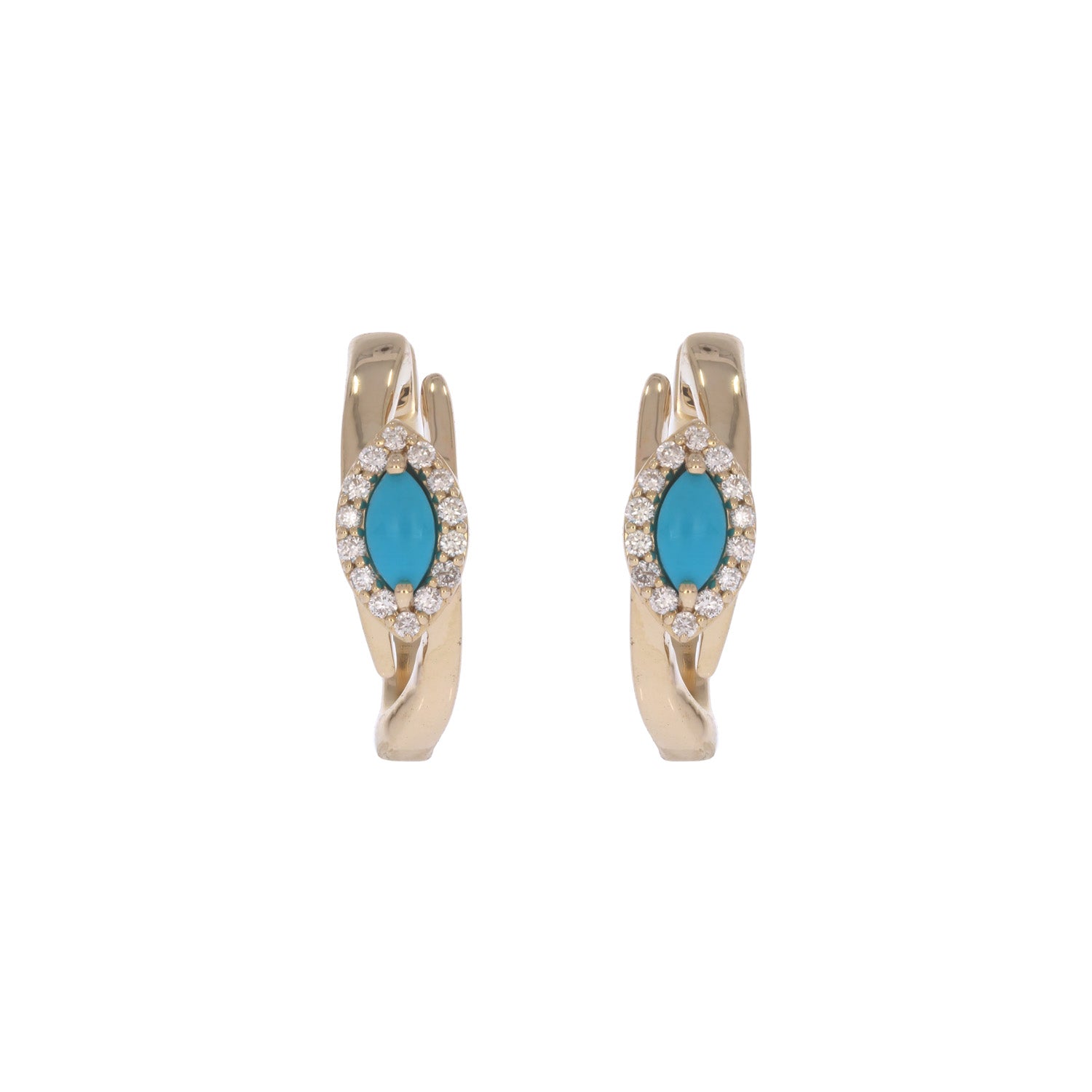

A gold ring is marked 14K. Another piece has 750 stamped inside it. Both are described as gold, yet the numbers look completely different. For a shopper, it is easy to wonder if karat and purity are two separate things or simply different ways of describing the same property.
They are closely related, but the terms do not mean exactly the same thing.
Karat is a system used to express the proportion of gold in an alloy on a 24-part scale. Gold purity refers to the amount of actual gold contained in the material. Fineness is another way of expressing that content, usually in parts per thousand.
Once these three ideas are connected, markings such as 10K, 14K, 18K, 417, 585, 750 and 999 become much easier to understand.
What Does Karat Mean in Gold?
Karat, written as K, tells you how many parts of a 24-part metal mixture are gold.
The system uses 24 as the reference point. If all 24 parts are gold, the material is described as 24K. If 18 of those 24 parts are gold, it is 18K.
The basic calculation is:
Gold percentage = (Karat ÷ 24) × 100
For example:
- 10K: 10 ÷ 24 × 100 = approximately 41.7% gold
- 14K: 14 ÷ 24 × 100 = approximately 58.3% gold
- 18K: 18 ÷ 24 × 100 = 75% gold
- 22K: 22 ÷ 24 × 100 = approximately 91.7% gold
- 24K: 24 ÷ 24 × 100 = 100% mathematically
The 24K figure represents the highest karat designation. In practical jewelry and bullion marking, very high-purity gold is commonly represented using fineness figures such as 999 or 999.9.
The important point is that karat tells you the proportion of gold within the alloy using a 24-part scale.
What Does Gold Purity Mean?
Gold purity is the amount of gold present in a material.
Gold jewelry is often made from an alloy rather than gold alone. Pure gold is relatively soft and malleable, so other metals may be added to produce a material with properties better suited to jewelry.
Those alloy metals can influence characteristics such as:
- Hardness
- Color
- Workability
- Strength
- Wear characteristics
- Overall appearance
For instance, an 18K gold alloy has 18 parts gold out of 24 parts total. The remaining six parts consist of other metals.
That does not mean the additional metals are simply there to reduce the amount of gold. They can serve important practical purposes in making jewelry suitable for different designs and types of wear.
So, when someone asks “what is gold purity?”, the simplest answer is: it describes the proportion of actual gold in the material.
Gold Karat vs Gold Purity: Are They the Same Thing?
This is where the terminology can get confusing.
Karat and purity are connected, but they are not interchangeable terms in every context.
Karat is a particular measurement system. Purity is the broader description of gold content.
Think of the relationship like this:
Karat → 24-part measurement
Percentage → gold content out of 100
Fineness → gold content out of 1,000
An 18K piece contains 18 parts gold out of 24. Convert that to a percentage and you get 75%. Express the same amount as fineness and it becomes 750 parts per 1,000.
The underlying gold content has not changed. Only the way that content is expressed has changed.
This is the key difference between gold karat vs gold purity. Karat gives you a standardized way of describing gold content, while purity refers to the actual proportion of gold.
Also Read: What is 18 Karat Gold? Discover Its Purity, Value, and Uses
Gold Karat and Purity Chart
|
Karat |
Gold Content |
Approx. Gold Percentage |
Common Fineness |
|
10K |
10 out of 24 |
41.7% |
417 |
|
14K |
14 out of 24 |
58.3% |
583 or 585 |
|
18K |
18 out of 24 |
75% |
750 |
|
22K |
22 out of 24 |
91.7% |
917 |
|
24K |
Highest karat |
Very high purity |
999 or 999.9 |
There is a small detail worth knowing about 14K gold.
The exact mathematical conversion of 14K is approximately 58.33%, which corresponds to about 583 parts per thousand. However, 585 is also commonly used as a practical fineness marking associated with 14K gold.
That is why a shopper may see 14K on one item and 585 on another without the markings representing entirely different categories of gold.
What Do 417, 585, 750 and 999 Mean on Gold?
Three-digit markings use the fineness system rather than the 24-part karat system.
Instead of asking how many parts out of 24 are gold, fineness expresses the amount of gold out of 1,000 parts.
What Does 417 Mean?
417 means approximately 417 parts gold per 1,000.
That works out to approximately 41.7% gold, corresponding mathematically to 10K.
What Does 585 Mean?
585 means 585 parts gold per 1,000, or 58.5% gold.
It is commonly associated with 14K gold.
The small difference between 14K's mathematical 58.33% and the 58.5% represented by 585 comes from the way fineness standards are used in practice.
What Does 750 Mean?
750 means 750 parts gold per 1,000.
That equals 75% gold and corresponds to 18K.
What Does 999 Mean?
999 means 999 parts gold per 1,000.
That represents approximately 99.9% gold and is commonly associated with very high-purity or fine gold.
One thing to remember: 750 is a fineness number, not a karat number.
A 750 marking does not mean 750K. It means the material contains 750 parts gold per 1,000.
Also Read: What is 14K Gold? 10K vs 14K vs 18K Gold Comparison Guide
How Is Gold Purity Calculated From Karat?
You can calculate gold purity from a karat marking with a simple formula:
Gold purity percentage = (K ÷ 24) × 100
Here are some examples.
18K Gold
18 ÷ 24 = 0.75
0.75 × 100 = 75%
So 18K gold contains 75% gold.
14K Gold
14 ÷ 24 = 0.5833
0.5833 × 100 = approximately 58.3%
10K Gold
10 ÷ 24 = 0.4167
0.4167 × 100 = approximately 41.7%
22K Gold
22 ÷ 24 = 0.9167
0.9167 × 100 = approximately 91.7%
The formula is useful when you encounter a karat marking and want to understand what percentage of the metal is gold.
It also makes the relationship between gold karat and purity much clearer.
Does Higher Karat Always Mean Better Gold?
Higher karat means a greater proportion of gold. It does not automatically mean that a piece of jewelry is better for every situation.
As the gold content increases, there is generally less room for other alloy metals. Since pure gold is relatively soft, this can affect how a jewelry piece behaves during everyday wear.
Higher-karat gold generally means:
- Higher gold content
- Higher purity
- Less alloy content
- Greater softness
Lower-karat gold generally contains a greater proportion of alloy metals, which can contribute to increased hardness depending on the particular alloy.
That is why a shopper should not judge a jewelry piece solely by its karat number.
The better question is whether the gold content and physical characteristics suit the intended use.
Why Isn't All Gold Jewelry 24K?
If higher karat means higher purity, it may seem logical to assume that every gold jewelry piece should be 24K.
The problem is that pure gold is soft and highly malleable.
Jewelry is exposed to movement, friction and occasional impact. Rings may come into contact with hard surfaces. Chains can experience pulling and bending. Gemstone settings need enough structural stability to hold their shape.
Alloying gold with other metals allows manufacturers to create materials with characteristics that are more appropriate for particular jewelry designs.
This does not make 24K gold inferior.
It simply means gold purity and practical jewelry performance are two different considerations.
A higher gold content can be desirable for one buyer, while another may place greater importance on hardness, design or intended use.
What Is Gold Fineness and How Is It Different From Karat?
Gold fineness is another numerical system for describing gold content.
The easiest way to remember the distinction is:
Karat = parts of gold out of 24
Fineness = parts of gold out of 1,000
For example:
- 10K ≈ 417 fineness
- 14K ≈ 583, with 585 commonly used
- 18K = 750 fineness
- 22K ≈ 917 fineness
- 24K ≈ 999 or 999.9 fineness
Both systems are describing the gold content, but they use different scales.
This is why a U.S. shopper may encounter a marking such as 585 or 750 on a piece of jewelry purchased from an international seller. The unfamiliar number does not necessarily mean the gold is a different type. It may simply be using the fineness system instead of the karat system.
How to Read Gold Purity Marks on Jewelry
A gold jewelry piece may carry a marking such as:
- 10K
- 14K
- 18K
- 22K
- 24K
- 417
- 585
- 750
- 999
A marking containing K uses the karat system.
A three-digit number generally refers to fineness.
For example:
14K = approximately 58.3% gold
585 = 58.5% gold
18K = 75% gold
750 = 75% gold
The seller or manufacturer information is also important when evaluating a jewelry item. A quality mark may appear alongside a maker's mark or trademark.
A stamp is useful information, but shoppers should also read the full product description and understand exactly what material is being offered.
If a piece is described as plated, filled or vermeil, its construction is different from solid gold jewelry even if a karat number appears in the description.
Does Gold Color Tell You the Purity?
No.
Color alone cannot establish gold purity.
Gold jewelry can appear yellow, white or rose-colored depending on the alloy composition and finishing used.
Two pieces with different colors can have the same karat level. Likewise, two pieces with similar colors can have different gold content.
For that reason, a strong yellow color should not be treated as proof of higher purity.
The same applies to white gold and rose gold.
If you want to know the gold content of a jewelry piece, look at the material description and applicable markings rather than relying on appearance.
Does Gold Weight Tell You the Purity?
Weight by itself does not tell you the karat or purity of gold.
Jewelry can be constructed in many ways. One piece may be hollow and lightweight, while another may be solid and heavier. Thickness, dimensions and design also affect weight.
Two similar-looking chains can therefore have noticeably different weights without that difference proving that one has higher purity.
Gold is dense, but weight and purity are separate characteristics.
A heavier piece is not automatically a higher-purity piece.
Karat, Purity and Gold-Plated Jewelry: Why the Terms Matter
One of the most important distinctions for a jewelry shopper is the difference between solid gold and gold applied to another material.
Common terms include:
- Solid gold
- Gold-filled
- Gold-plated
- Vermeil
With solid gold jewelry, the gold alloy makes up the metal of the piece, and the karat designation describes its gold content.
Gold-plated jewelry has a layer of gold over a different base metal.
Gold-filled jewelry also has a substantial gold layer mechanically bonded to a base metal.
Vermeil refers to gold applied over sterling silver.
This distinction matters because “14K gold-plated” does not mean the entire item contains the same gold proportion as solid 14K gold.
The karat designation can describe the gold used in the coating rather than the composition of the complete piece.
Always read the wording around the karat mark carefully.
A shopper comparing jewelry should know whether the gold description applies to the entire item or only to a surface layer.
Which Gold Purity Is Best for Jewelry?
There is no single gold purity that is best for every jewelry buyer.
The right choice can depend on:
- Intended use
- Desired gold content
- Durability requirements
- Budget
- Color preference
- Design
- Personal priorities
Someone choosing jewelry for frequent wear may have different priorities from someone purchasing a special-occasion piece.
Instead of asking which karat is universally best, start by understanding what the marking actually means.
That gives you a much better basis for comparing jewelry.
Also Read: White Gold vs Silver: Key Differences & Buying Tips
Common Mistakes People Make When Reading Gold Purity
Assuming 24K Means Exactly 100.000% Pure
24K represents the highest karat designation. Commercial fine gold is commonly expressed using fineness marks such as 999 or 999.9.
Assuming Higher Karat Automatically Means Better Jewelry
Higher karat means higher gold content. It does not automatically mean that the piece is better suited to every type of wear.
Confusing Karat With Carat
Karat and carat refer to different things.
Karat relates to gold purity.
Carat, commonly written as ct, refers to gemstone weight.
Treating Color as Proof of Purity
Gold color depends partly on alloy composition and finishing. Appearance alone cannot establish karat.
Assuming 750 Means 750K
It does not.
750 means 750 parts gold per 1,000, which equals 75% gold.
Confusing Plated Gold With Solid Gold
A plated item has a gold layer over another material. A karat designation describing that layer does not make the entire item the same as solid gold of that karat.
Assuming Weight Proves Purity
Weight is affected by the size, construction and design of a piece. It cannot establish purity by itself.
Assuming One Marking System Is Used Everywhere
Karat and fineness are different systems. A shopper may encounter either depending on the jewelry and where it was made or sold.
Karat vs Carat: Don't Confuse the Two
The words look almost identical, but they have different meanings.
Karat (K) describes gold content.
Carat (ct) is a unit associated with gemstone weight.
For example, a jewelry description could mention a 14K gold setting and a 1 ct gemstone.
The 14K describes the gold alloy.
The 1 ct describes the gemstone's weight.
Keeping these terms separate makes jewelry descriptions much easier to read.
What Should You Check Before Buying Gold Jewelry?
Before purchasing gold jewelry, look beyond the most prominent number in the product description.
Check:
- Karat or fineness marking
- Maker or seller information
- Complete material description
- Whether the item is solid, filled, plated or vermeil
- Jewelry weight
- Gemstone information, if applicable
- Invoice or receipt
- Return policy
- Documentation, when provided
- Seller reputation
Pay particular attention to the exact wording of the material description.
For example, 14K gold and 14K gold-plated describe very different types of jewelry.
The same principle applies when you see a number such as 750. First determine whether it is a fineness marking before trying to interpret it as a karat value.
When comparing gold jewelry or chains, understanding these terms helps you evaluate product descriptions more accurately and avoid making assumptions based on a single number.
The Simple Relationship Between Karat, Purity and Fineness
The easiest way to remember the entire concept is:
Karat → Percentage → Fineness → Jewelry Marking
Karat uses a 24-part scale.
Percentage expresses gold content out of 100.
Fineness expresses gold content out of 1,000.
Jewelry markings communicate that information on the actual item or in its description.
For example:
10K → approximately 41.7% gold → 417 fineness
14K → approximately 58.3% gold → 583 mathematically, with 585 commonly used
18K → 75% gold → 750 fineness
22K → approximately 91.7% gold → 917 fineness
24K → highest karat designation → commonly 999 or 999.9 fineness
So, gold karat vs gold purity is not a case of choosing one measurement over another.
Karat tells you the proportion of gold using a 24-part system. Purity describes the actual gold content. Fineness provides another numerical way to express that content.
Once you understand how these terms connect, a gold marking that initially looks unfamiliar becomes much easier to interpret.